
 Sold out
Diablo
2-3/4'' LAME OSCILLANTE DIAMANTÉE POUR COULIS DOU16DGX
Regular price CA$50.51Unit price /Unavailable
Dewalt
DEWALT DWA4240 Diamond Half-Moon Oscillating Blade
Regular price CA$41.88Unit price /UnavailableLow stock (5 units)
Équipement Polar
DIAMOND SAW BLADE 16 X .125 X 1" DIAMOND PRODUCT HB16125UNV
Regular price CA$209.95Unit price /UnavailableLow stock (3 units)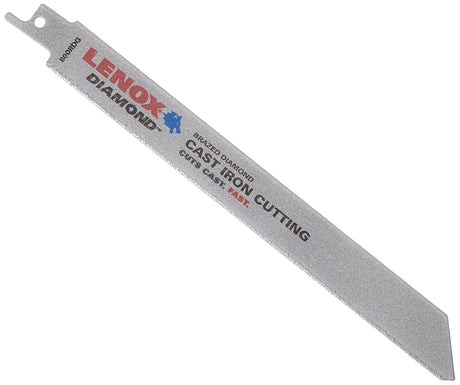
 Sold outSale
Lenox
8'' DIAMOND ALTERNATIVE SAW BLADE
Sale price CA$25.35 Regular price CA$27.88Unit price /Unavailable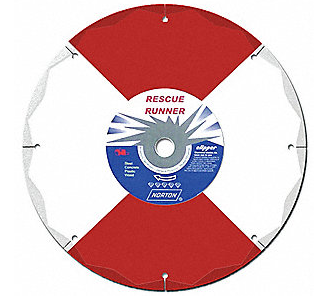 Sold out
Norton Saint-gobain
14" DUO CLIPPER DIAMOND SAW BLADE
Regular price CA$435.10Unit price /Unavailable
Norton Saint-gobain
NORTON 70184645306 4X4 16" MAXIMUM DIAMOND SAW BLADE
Regular price CA$477.49Unit price /UnavailableVery low stock (1 unit)Norton Saint-gobain
14" STAR BLUE DIAMOND SAW BLADE
Regular price CA$179.99Unit price /UnavailableIn stock (16 units)
Norton Saint-gobain
14" DIAMOND SAW BLADE AEROJET NORTON 70184683785
Regular price CA$579.33Unit price /UnavailableVery low stock (1 unit)
Norton Saint-gobain
NORTON 4X4 14" DIAMOND SAW BLADE (70184684547)
Regular price CA$291.40Unit price /UnavailableVery low stock (1 unit)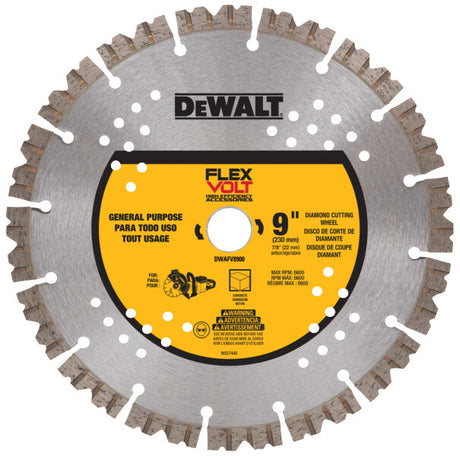 Sale
SaleDewalt
DEWALT DWAFV8900 9" DIAMOND SAW BLADE
Sale price CA$84.03 Regular price CA$89.63Unit price /UnavailableIn stock (40 units)

Dewalt
DIAMOND OSCILLATING FLUSH CUT BLADE DWA4242
Regular price CA$16.86Unit price /UnavailableLow stock (6 units) Sale
SaleDewalt
Sale price CA$79.00 Regular price CA$103.64Unit price /UnavailableVery low stock (2 units) Sold out


Our recommendations
-

Chicago pneumatic
Regular price CA$245.81Unit price /UnavailableIn stock (12 units) -

Chicago pneumatic
DIE GRINDER 1/4'' CP RIGHT ANGLE PG93
Regular price CA$174.75Unit price /UnavailableLow stock (10 units) -

Chicago pneumatic
Regular price CA$125.35Unit price /UnavailableIn stock (26 units) -
 Sold out
 -

Chicago pneumatic
Regular price CA$162.35Unit price /UnavailableIn stock (13 units) -
 Sold out
 -
 Sold out
 -

Hangsterfer's
CUTTING OIL 5030 19L. HANGSTERFER'S
Regular price CA$275.49Unit price /UnavailableVery low stock (2 units) -

Hangsterfer's
CUTTING OIL 5040 205L. HANGSTERFER'S
Regular price CA$3,215.17Unit price /UnavailableLow stock (4 units) -
 Sold out
Hangsterfer's
CUTTING OIL S-500CF 205L. HANGSTERFER'S
Regular price CA$3,157.14Unit price /Unavailable -

Tap Magic
Regular price CA$141.36Unit price /UnavailableLow stock (5 units) -
 Bestseller
Dewalt
Dewalt FLEXVOLT 9Ah 2-Pack Battery
Regular price CA$428.00Unit price /UnavailableLow stock (3 units) -

 BestsellerSale
Dewalt
DEWALT POWERSTACK 20V 8AH XR DCB2108 BATTERY
Sale price CA$219.00 Regular price CA$299.00Unit price /UnavailableLow stock (5 units) -


Dewalt
SET OF 2 DEWALT 20V BATTERIES. 8AH
Regular price CA$328.00Unit price /UnavailableLow stock (7 units) -
 Bestseller
Dewalt
Regular price CA$298.00Unit price /UnavailableIn stock (42 units) -
 Sold out
Fein Power Tools
FEIN CCG 18-125-10 AS 5" CORDLESS ANGLE GRINDER (TOOL ONLY)
Regular price CA$436.00Unit price /Unavailable





A complete guide to choosing your professional diamond blades
What type of diamond blade should I choose depending on the material I am cutting?
Turbo blades with spirally serrated segments are excellent for natural stone, granite, and abrasive materials requiring fast cutting with a relatively smooth finish. The turbo geometry reduces vibration by 30% and increases cutting speed by 20 to 40% compared to standard segmented blades. Priced from $25 to $150, their versatility and performance on a variety of materials are justified.
Continuous edge blades with no gaps produce ultra-clean cuts in tile, ceramic, porcelain, and glass without chipping the edges. Mandatory water cooling eliminates excessive heat that could crack brittle materials. Diameters from 4 to 10 inches are available for tile saws and angle grinders, suitable for delicate finishes. For reinforced concrete with high rebar density, high-diamond segmented blades with laser-welded segments offer superior resistance to repeated impacts.
Polar Industrial Equipment advises selection based on frequency of use and dominant materials of your projects.
Wet cutting versus dry cutting: understanding the differences and applications
Requires a continuous water supply and recovery systems for clean worksites. Dry cutting allows for waterless sectioning, ideal for outdoor worksites, demolition, and mobile applications without access to water. Blades are specifically designed with ventilation holes and spaced segments to maximize air cooling.
Cutting speed reduced by 30 to 50% and lifespan decreased by 40 to 60% compared to wet cutting. Significant dust generation requiring P100 respirators and silica-compliant dust extraction systems.
Universal wet and dry compatible blades offer maximum flexibility for contractors performing a variety of jobs. Segment construction with metallic bonds resistant to both operating methods. A 20-30% price premium is justified by eliminating the need for multiple inventories. For series production of tiles, wet cutting is essential. For demolition and occasional outdoor cutting, dry cutting is acceptable with caution.
Polar Industrial Equipment recommends evaluating environmental constraints and production volumes to optimize the choice.
Manufacturing technologies: laser welding and diamond concentration
Welding temperature of 1500°C guaranteeing structural integrity supporting speeds of 12,000 RPM without failure.
Extended lifespan by 50% compared to conventional brazed segments. Hilti offers blades with variable diamond concentration depending on the zone: a high concentration of 40% at the ends for cutting abrasive materials, and a medium concentration of 25% in the center for a cost-performance balance.
Proprietary metal bonding technology withstands temperatures of up to 400°C during intensive dry cutting. Asymmetrical segmentation reduces vibration and increases cutting stability by 35% for improved precision. Bosch integrates titanium coatings on diamond segments, increasing surface hardness by 30% and wear resistance in extra-abrasive materials such as granite and quartzite.
Computer-simulated segment geometry for maximum debris removal and efficient cooling. Universal compatibility with standard 4.5" to 9" angle grinders without special adapters. Prices range from $30 to $300 depending on diameter and diamond concentration, reflecting advanced manufacturing technologies.
Polar Industrial Equipment stocks premium brands for the most demanding applications requiring absolute reliability.
Professional applications: construction, masonry and stone cutting
Daily cutting rates of 10 to 30 cuts justify investment in durable premium blades.
Masons and tile setters use 4- to 7-inch blades for cutting bricks, concrete blocks, and ceramic tiles. Continuous edge blades produce clean cuts without chipping in fragile porcelain and ceramic.
Wet cutting is mandatory for visible finishes, eliminating dust and preventing thermal cracking. Installations of 50 to 200 tiles per project require blades that maintain consistent precision without compromising quality. Professional stonemasons require specialized diamond blades for granite, marble, and limestone with diamond concentrations of 35% to 45%.
Cutting speeds of 80 to 150 mm per minute in dense granite, depending on saw power and cooling. Polished finishes require progressing from coarse to fine blades to gradually remove cut marks. Turbo blades offer an optimal balance between speed and finish quality.
Polar Industrial Equipment provides complete ranges according to specialties for maximum efficiency on construction sites and workshops.
Maintenance and storage: extending the life of your diamond blades
Soaking in a degreasing solution removes oils and organic contaminants, reducing cutting efficiency by 20 to 40%. Inspect segments weekly to identify excessive wear, cracks, or detachment requiring immediate replacement before catastrophic failure. Uniform wear indicates correct grinder alignment, while asymmetrical wear reveals excessive vibration or imbalance requiring correction.
Worn segments with less than 2 mm of remaining height lose efficiency drastically and risk overheating, damaging the steel body. Store diamond blades suspended vertically or flat in dry locations, avoiding direct contact between segments. Humidity causes oxidation of the metallic bonds, weakening the adhesion of the diamond particles.
Extreme temperatures of -20°C to +50°C, typical of Quebec winters, do not affect the diamond itself but can weaken the bonding. Avoid impacts and drops that cause invisible micro-cracks, compromising structural integrity. Typical lifespan varies from 20 to 500 hours depending on the cut materials, cutting techniques, and initial quality.
Polar Industrial Equipment offers replacement blades and technical advice for optimizing longevity and performance.