

Jacobs Chuck
JACOB K3 CHUCK KEY JCM13700P20
Regular price CA$14.07Unit price /UnavailableIn stock (12 units)
Dewalt
DEWALT 1/2" KEYLESS CHUCK 1/2"-20 THREAD
Regular price CA$59.00Unit price /UnavailableVery low stock (2 units) Sold out
Jacobs Chuck
CHUCK 1/2" 14N JT3 JACOBS BALL BEARING 30221
Regular price CA$435.31Unit price /Unavailable Sold outSale
Jacobs Chuck
Sale price CA$7.33 Regular price CA$7.82Unit price /UnavailableJacobs Chuck
Regular price CA$11.60Unit price /UnavailableVery low stock (2 units) Sold out
Simpson strongtie
REPLACEMENT 7-1/2" STRONG TIE CHUCK PMANDREL75-RC
Regular price CA$29.76Unit price /UnavailableLow stock (5 units) Sale
SaleJacobs Chuck
Sale price CA$452.38 Regular price CA$475.00Unit price /UnavailableVery low stock (1 unit) Sold out
Jacobs Chuck
1/2" 24BA JACOB 3/8-24 JACOBS CHUCK 14946
Regular price CA$101.60Unit price /UnavailableÉquipement Polar
Sale price CA$16.71 Regular price CA$17.47Unit price /UnavailableVery low stock (2 units)Makita
CHUCK WITH SDS-PLUS TYPE PILOT DRILL
Regular price CA$11.57Unit price /UnavailableVery low stock (1 unit) Sold out
 Sale
SaleMK Morse
Sale price CA$15.37 Regular price CA$15.88Unit price /UnavailableVery low stock (1 unit)


Our recommendations
-

Topring
TOPRING 72.170 TECHNOPOLYMER HOSE 1/4 X 100 X 1/4 EASYFLEX 72.170
Regular price CA$117.29Unit price /UnavailableLow stock (3 units) -
Topring
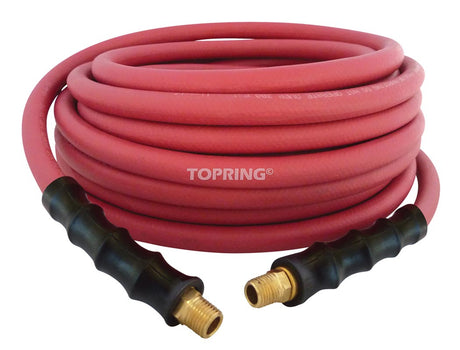
AIR HOSE 3/8" X 50' X 1/4 MAXPRO (71.379)
Regular price CA$68.99Unit price /UnavailableLow stock (10 units) -

Topring
Regular price CA$36.96Unit price /UnavailableVery low stock (1 unit) -

Topring
3/4" x 25' Thermoflex Topring Air Hose 72.520
Regular price CA$108.69Unit price /UnavailableVery low stock (2 units) -

Topring
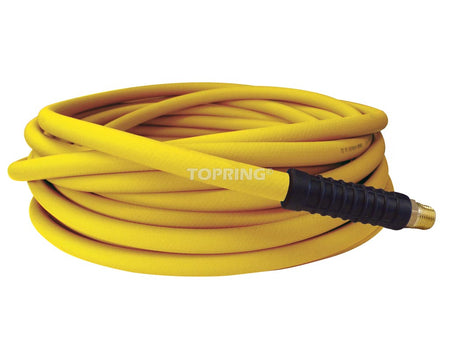
TOPRING 70.138 AIR HOSE 1/4 X 50' ECOFLEX 70.138
Regular price CA$51.85Unit price /UnavailableLow stock (4 units) -
Topring
Regular price CA$107.20Unit price /UnavailableVery low stock (2 units) -

 Bestseller
Milwaukee
MILWAUKEE 18V 12Ah FORGE BATTERY 48-11-1813
Regular price CA$448.00Unit price /UnavailableIn stock (14 units) -

Dewalt
30 AMPS BATTERY CHARGER AND MAINTAINER DXAEC100
Regular price CA$179.00Unit price /UnavailableLow stock (5 units) -

 Sold out
 -

Fein Power Tools
ASCM18-4QM CORDLESS DRILL DRIVER AS ENS. QUICKIN TOP
Regular price CA$1,401.43Unit price /UnavailableVery low stock (1 unit)





A complete guide to choosing your professional drill chucks
What chuck capacity should you choose based on your drilling needs?
Applications include furniture assembly, electrical installation, and finishing work requiring handy tools weighing 1 to 2 kg. Prices range from $15 to $45 for limited capacity but optimal lightness.
3/8" (10 mm) chucks dominate standard general purpose drills covering 80% of home and professional applications.
Drill bits from 1 to 10 mm for drilling wood, plastic, aluminum, and mild steel. Compatible with 500 to 800W drills, providing sufficient torque for efficient drilling without overloading. A $25 to $80 investment justified by its versatility and durability in regular use.
1/2" (13 mm) chucks are used on high-power drills and impact drills for drill bits up to 13 mm in hard materials. Industrial applications include drilling concrete, masonry, and thick steel requiring torques of 60 to 90 Nm.
Reinforced construction in hardened steel withstands high stresses without deformation. Prices range from $40 to $150 for maximum robustness. For light-duty work, 1/4" is sufficient. For general use, 3/8" is optimal. For heavy-duty applications, 1/2" is essential.
Polar Industrial Equipment recommends selection based on drill power and frequently used drill bit diameters.
Self-tightening chuck versus keyed chuck: understanding the essential differences
Quick drill bit changes in 5 to 10 seconds optimize productivity during jobs requiring multiple bits. Priced from $20 to $100, these chucks offer maximum convenience and eliminate the risk of losing a chuck key. Keyed chucks require a dedicated tightening tool that generates forces of 100 to 150 Nm through mechanical leverage.
Superior grip for large-diameter drill bits from 10 to 13 mm and demanding applications in concrete, steel, and masonry. Ultra-firm clamping eliminates slippage under high loads of 60 to 90 Nm, typical of high-power drills. Priced from $15 to $80 with exceptional durability of 10 to 20 years.
Hybrid chucks combine quick manual tightening with a key-operated tightening option, offering an optimal compromise. Use them without a key for everyday speed, or with a key for critical applications requiring absolute hold. They are moderately priced from $35 to $120. For light screwdriving and drilling, self-tightening chucks are recommended. For heavy-duty drilling of hard materials, keyed chucks are preferable.
Polar Industrial Equipment recommends evaluating the ratio between frequency of changes and intensity of use.
Mounting types: Morse tapers, threads, and SDS adapters
Replacement in 2 to 5 minutes without specialized tools. Price from $20 to $100 including mounting screws and instructions. Morse taper chucks fit by friction into the tapered spindles of pillar drills and milling machines. MT1 to MT4 tapers, depending on machine dimensions, offer superior rigidity and concentricity under 0.01 mm for precision drilling.
Disassembly by light tapping on the ejector key. Industrial applications requiring strict dimensional repeatability. Price from $50 to $150 for professional quality. SDS adapters allow mounting standard chucks on SDS-Plus and SDS-Max impact drills designed for special shank drills. Temporary conversion for using conventional twist drills during mixed applications.
Torque limits of 40-60 Nm prevent overloading of the SDS mechanism. Priced from $25 to $80, offering flexibility without the need for an additional drill. Check your drill's mounting type before purchasing: threaded for portable drills, Morse taper for stationary machines, or an adapter for SDS.
Polar Industrial Equipment provides complete specifications for guaranteed compatibility.
Professional applications: construction, installation and manufacturing
Electricians and plumbers use compact 1/4" to 3/8" chucks on lightweight drills for drilling in tight spaces such as electrical boxes and wall cavities. Drill bits from 3 to 8 mm are used for routing wires and pipes. Self-tightening chucks facilitate one-handed operation in awkward overhead positions or confined spaces requiring agility. Their reduced weight of 150 to 300 grams minimizes fatigue during 8-hour workdays.
Manufacturing workshops require precision chucks mounted on pillar drills for repetitive drilling of parts in series. Concentricity of less than 0.02 mm guarantees perpendicular and dimensionally accurate holes within tolerances of ±0.1 mm. Keyed chucks offer absolute hold for carbide drills in steel and cast iron. Production rates of 100 to 500 holes per shift justify the investment in industrial quality.
Polar Industrial Equipment provides solutions tailored to specific production rates and materials.
Maintenance and installation: maximizing lifespan and performance
A tightening torque of 30 to 50 Nm prevents loosening during heavy use. Check the tightness periodically every 3 to 6 months. Clean the chuck jaws monthly with a soft brush and compressed air to remove accumulated metal shavings and dust. Accumulation compromises uniform tightening, causing drill bit eccentricity and excessive vibration.
Applying a light coat of dry lubricant or light grease to the threads of the clamping mechanism maintains smooth movement. Avoid liquid oils that attract dust and debris, which worsen fouling. Inspect the jaws quarterly, identifying excessive wear or deformation that requires replacement.
A gap of more than 0.5 mm between the jaws in the closed position indicates critical wear. Drill bits slipping during drilling indicate a loss of clamping force requiring intervention. Store drills with the chucks slightly open to avoid permanent compression of internal springs. Typical lifespan is 5 to 15 years depending on the intensity of use and maintenance.
Polar Industrial Equipment offers replacement chucks and spare parts for operational continuity.