
 Sold out
 Sold out
Pferd Canada inc.
PFERD 16081 5PC. WORKSHOP FILE SET
Regular price CA$66.93Unit price /Unavailable
Dewalt
Regular price CA$59.00Unit price /UnavailableVery low stock (2 units)

Nicholson
SET OF 6 NICHOLSON 42030L DIY FILES
Regular price CA$56.09Unit price /UnavailableVery low stock (1 unit)
Pferd Canada inc.
PFERD 17038 8'' CHAINSAW FILE 6-PACK
Regular price CA$1.94Unit price /UnavailableLow stock (6 units)


Nicholson
JEU DE 5 LIMES NICHOLSON 22040HNNN
Regular price CA$77.76Unit price /UnavailableLow stock (4 units)

Nicholson
NICHOLSON 9PC FILE SET 22030HNNN
Regular price CA$181.33Unit price /UnavailableLow stock (3 units)

Makita
MAKITA DUX18Z HANDLE/POWER POWER SUPPLY
Regular price CA$299.00Unit price /UnavailableLow stock (10 units)
Nicholson
Bastard cut round file 10'' Nicholson
Regular price CA$15.56Unit price /UnavailableLow stock (7 units)
Jet
10" SECOND TRIANGULAR FILE JET 531850
Regular price CA$19.95Unit price /UnavailableIn stock (11 units)
Nicholson
3/16" x 8" Chainsaw File Nicholson 02229B
Regular price CA$6.00Unit price /UnavailableIn stock (67 units)
Nicholson
#7 SLEEVE FOR 12" LIME NICHOLSON 21515
Regular price CA$7.50Unit price /UnavailableVery low stock (2 units)


Our recommendations
-

 Sold out
 -


Lenox
TUBE CUTTER 1/8 - 1 3/8" LENOX 21011
Regular price CA$65.26Unit price /UnavailableVery low stock (2 units) -
 Sold out
 -

Norton Saint-gobain
5" GR40 BLAZE NORTON Flap Disc (66254400262)
Regular price CA$13.50Unit price /UnavailableIn stock (168 units) -

Norton Saint-gobain
NORTON 4 1/2" X 7/8 GR. 60 SANDBLASTER (66623353311)
Regular price CA$0.95Unit price /UnavailableIn stock (40 units) -

Norton Saint-gobain
NORTON 4 1/2" X 7/8 GR. 80 SANDBLASTER DISC (66623353312)
Regular price CA$0.84Unit price /UnavailableIn stock (25 units) -

Norton Saint-gobain
NORTON 5" X 7/8 GR.50 SANDBLADING DISC (66623357278)
Regular price CA$1.09Unit price /UnavailableIn stock (40 units) -

Norton Saint-gobain
NORTON 5" X 7/8 GR.60 SANDBLADING DISC (66623357279)
Regular price CA$1.06Unit price /UnavailableIn stock (100 units) -

Norton Saint-gobain
NORTON 5" X 7/8 GR. 80 SANDBLASTER DISC (66623357280)
Regular price CA$1.00Unit price /UnavailableIn stock (25 units) -

Hangsterfer's
CUTTING OIL 5030 19L. HANGSTERFER'S
Regular price CA$275.49Unit price /UnavailableVery low stock (1 unit) -
 Sold out
 -

Hangsterfer's
SLIDE OIL #2 19L. HANGSTERFER'S
Regular price CA$217.38Unit price /UnavailableLow stock (5 units) -

Hangsterfer's
CUTTING OIL 5040 205L. HANGSTERFER'S
Regular price CA$3,215.17Unit price /UnavailableLow stock (3 units) -

Hangsterfer's
CUTTING OIL S-500CF 205L. HANGSTERFER'S
Regular price CA$3,157.14Unit price /UnavailableLow stock (7 units) -

Tap Magic
Regular price CA$141.36Unit price /UnavailableLow stock (4 units) -


Dewalt
DEWALT VACUUM CLEANER 10 GAL 5.5HP DXV10PL
Regular price CA$199.00Unit price /UnavailableVery low stock (2 units) -

Fein Power Tools
FEIN TURBO II WET/DRY VACUUM CLEANER 92036236090
Regular price CA$820.00Unit price /UnavailableVery low stock (2 units)


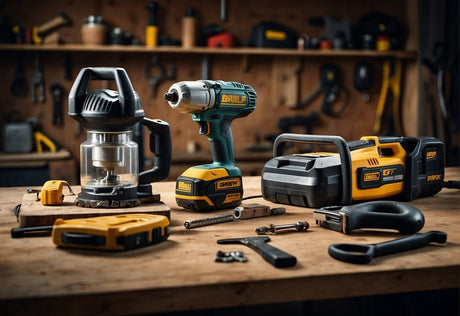


A complete guide to choosing your professional industrial metal files
What type of metal file should I choose depending on the profile I need to work on?
Half-round files combine a flat face and a curved face, offering versatility for various surfaces, ideal for general workshops carrying out diverse work.
Round files with diameters from 3 to 20 mm are excellent for widening circular holes, adjusting holes and finishing concave contours inaccessible to flat shapes.
Triangular files allow for the finishing of acute internal angles from 60 to 90 degrees in grooves and notches. Specialized quarter-round files are suitable for connecting grooves and fillets requiring a precise rounded profile.
Multi-shape sets including 5 to 12 files of varying geometries offer an economical solution for workshops requiring maximum versatility. Typical working lengths of 100 to 250 mm cover fine adjustments and significant material removal. Shank files from 50 to 150 mm are suitable for drills and rotary tools for mechanizing repetitive tasks.
Polar Industrial Equipment advises selection according to the diversity of your applications and daily production volumes.
understand the differences between coarse, medium and fine
Medium-tooth files with 40 to 50 teeth per inch offer an optimal compromise between material removal speed and finish quality for most professional applications. They remove 0.2 to 0.5 mm with an acceptable semi-finished surface for standard joinery.
Their versatility makes them popular in workshops where they perform a variety of tasks on a daily basis.
Fine-toothed files with 60 to 80 teeth per inch produce precise finishes of 0.05 to 0.2 mm for critical dimensional adjustments and surface preparation prior to assembly or painting.
Smooth surface minimizing subsequent polishing work. Diamond files offer ultra-fine teeth for hard materials such as hardened steel, carbide, and ceramics that are impossible to file with conventional steel.
Typical professional progression: roughing with coarse teeth, adjustment with medium, finishing with fine.
Polar Industrial Equipment recommends acquiring several gear sets for maximum flexibility depending on the work stages.
Hardened steel files versus diamond files: technologies and applications
One-piece construction, 200 to 350 mm in length, including an integrated handle or tang for ferrule attachment. Priced from $12 to $45, they are accessible for intensive daily use, with a lifespan of 500 to 2000 hours depending on materials and techniques.
Diamond files incorporate industrial diamond particles electrodeposited on a metallic substrate, offering exceptional hardness for difficult materials.
Superior performance on hardened steel, stainless steel, titanium, carbide, and composite materials impossible to file with conventional steel. Priced from $40 to $149, justified by its versatility and lifespan of 3,000 to 5,000 hours in abrasive materials.
Diamond files produce a finer surface with less physical effort compared to steel files in hard materials.
No clogging in sticky materials like aluminum and plastics thanks to the open geometry of the diamond grains. Simple cleaning with a brass brush maintains consistent performance. For stainless steel and common exotic materials, the investment in diamond files pays for itself quickly.
Polar Industrial Equipment stocks both technologies for optimal adaptation to your specific materials.
Professional applications: machining, welding and precision fitting
Adjustment of keys, pins and fasteners for tight H7/g6 fits requiring controlled progressive removal of a few hundredths of a millimeter.
Welders require flat and half-round files for removing slag, spatter and burrs after MIG, TIG and arc welding.
Chamfer preparation prior to welding ensures optimal penetration. Weld bead finishing provides an aesthetic appearance and reduces stress concentrations. Files are resistant to abrasive flux residues and slag without rapid premature wear. Fitters and assemblers use these files to adapt parts during the assembly of metal structures, machines, and equipment.
Correction of deformations, alignment adjustments, and adaptation of slightly out-of-tolerance parts, preventing costly rejections. Files allow for on-site adjustments without complete disassembly or return to the workshop. Triangular files are essential for adjusting keyways and positioning notches.
Polar Industrial Equipment provides complete configurations tailored to specific trade specialties for maximum efficiency.
Safe filing techniques and maintenance of professional files
Pressure only on forward stroke, file lifted slightly on return avoiding premature wear of the teeth and generation of excessive heat.
Ergonomic working position with workpiece securely fixed at elbow height, reducing fatigue during prolonged filing. Wearing safety glasses is mandatory to prevent injuries from flying metal shavings.
Abrasion-resistant gloves that protect hands while maintaining the tactile sensitivity needed for precise control of material removal and detection of hardness variations.
Proper file maintenance prolongs their lifespan and ensures optimal performance. Clean the teeth after each use with a brass wire brush to remove accumulated filings that clog the teeth.
Files with aluminum buildup require soaking in a degreasing solution followed by brushing. Suspended storage prevents friction between files, which can damage fragile teeth. A light application of protective oil to steel files prevents oxidation during prolonged storage. Replace when the teeth become dull after 500 to 2000 hours, as efficiency decreases drastically, requiring excessive effort.
Polar Industrial Equipment offers replacement files for uninterrupted operational continuity.