

Topring
TOPRING 60.320 TOPRING AIR BLOW GUN
Regular price CA$22.18Unit price /UnavailableIn stock (47 units)
Topring
TOPRING 60.396 AIR BLOW GUN 40'' LONG
Regular price CA$59.94Unit price /UnavailableVery low stock (2 units)
Topring
TOPRING 60.395 AIR GUN 20" LONG
Regular price CA$48.49Unit price /UnavailableVery low stock (2 units)


Our recommendations
-

Dewalt
DEWALT 20 GAL VERTICAL COMPRESSOR DXCM20020US
Regular price CA$899.00Unit price /UnavailableVery low stock (2 units) -
 Sold outSale
Makita
Makita AC001GZ XGT 40Vmax Brushless Air Compressor (Tool)
Sale price CA$499.00 Regular price CA$529.00Unit price /Unavailable -
 Sold out
Rolair
LIGHTWEIGHT PORTABLE COMPRESSOR 5.3GAL 2.5HP
Regular price CA$719.00Unit price /Unavailable -
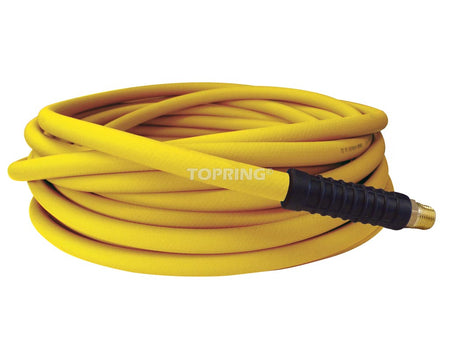
Topring
Regular price CA$107.20Unit price /UnavailableLow stock (10 units) -
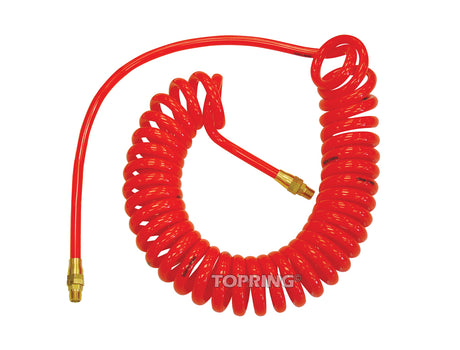
Topring
AIR HOSE 1/4 X 25' RED TOPRING
Regular price CA$58.94Unit price /UnavailableLow stock (3 units) -

Topring
TOPRING 70.138 AIR HOSE 1/4 X 50' ECOFLEX 70.138
Regular price CA$51.85Unit price /UnavailableLow stock (8 units) -

Topring
TOPRING 72.170 TECHNOPOLYMER HOSE 1/4 X 100 X 1/4 EASYFLEX 72.170
Regular price CA$117.29Unit price /UnavailableLow stock (3 units) -

Topring
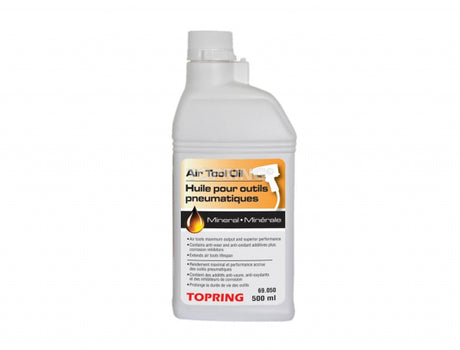
TOPRING 69.050 PNEUMATIC TOOL OIL 500ML
Regular price CA$9.16Unit price /UnavailableIn stock (19 units) -
Topring
Regular price CA$47.11Unit price /UnavailableLow stock (6 units) -

Topring
PNEUMATIC TOOL OIL (WINTER) 500 ML topring 69.450
Regular price CA$22.22Unit price /UnavailableIn stock (12 units) -
 Sold out
 -


Dewalt
PACK OF 2 POWERPACK 4AH BATTERIES DEWALT DCB2104-2
Regular price CA$248.00Unit price /UnavailableLow stock (8 units)




A complete guide to choosing your professional air bellows
What type of air blower should you choose based on your cleaning needs?
Air compressor-connected pneumatic bellows are excellent for heavy-duty cleaning, with 50 to 200 uses per day in continuous production. Pressures of 60 to 120 PSI generate a powerful airflow of 5 to 15 CFM, removing metal shavings, filings, and embedded dust. Interchangeable nozzles from 2 to 12 inches reach tight spaces around machines and components.
An investment of $30 to $150 is justified by superior performance and ergonomics, reducing operator fatigue by 70%. Foot-operated bellows free up hands for simultaneous handling of parts during cleaning. A robust pedal supports weights of 80 to 120 kg, generating sufficient pressure for light debris. Ideal for fixed workstations requiring repetitive cleaning without interrupting operations. For workshops without a compressor, manual models are sufficient. For mass production, pneumatic models are essential.
Polar Industrial Equipment recommends evaluating daily cleaning volumes for appropriate sizing.
Construction materials: rubber, leather and industrial plastic
Genuine leather bellows combine traditional robustness with professional aesthetics for applications requiring extreme durability. They offer superior resistance to abrasion and punctures in environments with aggressive metal particles. With periodic maintenance including the application of leather conditioners, they have a lifespan of 8 to 15 years in professional use. Priced from $40 to $120, they reflect both craftsmanship and exceptional longevity.
Reinforced industrial plastic bellows offer lightweight, chemical-resistant performance in environments exposed to solvents, oils, and cleaning products. Their foldable design allows for compact storage in confined spaces. They are 40% to 60% lighter than leather, reducing fatigue during repeated handling. Economical pricing ranges from $12 to $35 for standard applications without extreme requirements. For heavy-duty daily use, leather is recommended. For chemical environments, plastic is preferable.
Polar Industrial Equipment stocks a variety of materials for adaptation according to specific workshop constraints.
Nozzles and tips: precision blowing for a variety of applications
The 45° and 90° angled nozzles reach into corners, grooves, and hard-to-reach areas around complex components. Lengths from 6 to 12 inches with articulated joints allow for precise jet direction. They remove metal filings from threads, grooves, and bores that are impossible to clean with straight nozzles. Cleaning time is reduced by 40 to 60% on complex geometries. The 1 to 3 mm diameter concentrated fine jet nozzles are excellent for cleaning electronic circuits, bearings, and sensitive precision mechanisms.
Controlled pressure from 20 to 40 PSI prevents damage to delicate components. Soft rubber tips protect machined surfaces from scratches during handling. Interchangeable nozzles are compatible with most professional blower tools via standard 1/4" fittings. For maximum versatility, kits include 3 to 6 different nozzles covering 90% of workshop applications.
Polar Industrial Equipment recommends the acquisition of specialized nozzles according to the dominant cleaning types.
Professional applications: machining, welding and industrial maintenance
Daily cleaning rates of 30 to 100 cycles justify the use of high-performance pneumatic bellows with long nozzles that reach confined areas of CNC equipment. Welding stations use bellows to remove slag, spatter, and dust before weld bead inspection and preparation for subsequent passes.
Accelerated cooling of welded parts by air circulation reduces cycle time by 30 to 50%. Cleaning of MIG and TIG torch nozzles maintains consistent weld quality. Bellows resistant to the temperatures and incandescent spatter typical of welding environments. Industrial maintenance teams require portable bellows for the preventative cleaning of electric motors, bearings, and transmission systems.
Dust and debris removal prevents overheating and premature wear. Visual inspection after cleaning is facilitated, revealing cracks, leaks, and damage hidden beneath dirt. Compact hand-operated bellows allow for mobile interventions without the need to carry compressors.
Polar Industrial Equipment provides complete solutions for optimizing cleaning programs and preventive maintenance.
Safety and best practices: preventing injuries and contamination
Wear abrasion-resistant gloves to protect your hands from sharp particles when handling nozzles. Keep blowing pressure below 30 PSI when cleaning body surfaces to avoid the risk of air injection under the skin, which can cause potentially fatal embolisms.
Never direct the jet towards people or animals, even at low pressures. Blowing out electronic components requires reduced pressures of 15 to 25 PSI to prevent damage to circuits and displacement of delicate components. Perform cleaning in well-ventilated areas or use simultaneous vacuum systems to capture blown debris before it disperses into the ambient air.
Compliant with CNESST standards limiting exposure to silica dust and heavy metals. Inspect bellows monthly, identifying cracks, perforations, or material degradation requiring immediate replacement. Store in dry locations to prevent mold and premature degradation of rubber and leather. Typical lifespan of 3 to 15 years depending on initial quality and maintenance.
Polar Industrial Equipment offers technical training and safety advice for optimizing professional practices.