

Noga
Regular price CA$19.31Unit price /UnavailableLow stock (8 units)
Noga
NOGA NG8350 "TELE SET" deburring set
Regular price CA$25.00Unit price /UnavailableVery low stock (1 unit)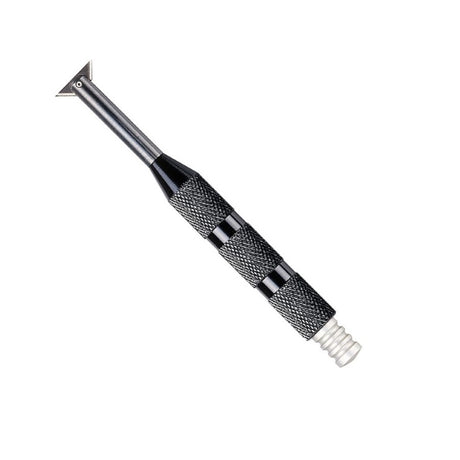

Noga
NOGA RC2200 Large Reversible Deburring Tool Holder
Regular price CA$40.66Unit price /UnavailableLow stock (6 units)
Noga
NOGA SP7700 ''THE SET'' deburring set
Regular price CA$162.20Unit price /UnavailableVery low stock (2 units)

Noga
NOGA E300 BS3010 DEBURRING BLADE
Regular price CA$3.78Unit price /UnavailableLow stock (9 units)
Shaviv
SHAVIV DEBURRING TOOL MODEL E 155-29069
Regular price CA$28.71Unit price /UnavailableLow stock (5 units)
Shaviv
Shaviv B 155-29066 deburring kit
Regular price CA$31.72Unit price /UnavailableLow stock (3 units)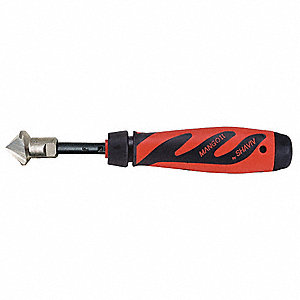
Shaviv
MANGO II SHAVIV deburring tool 155-90071
Regular price CA$51.01Unit price /UnavailableVery low stock (1 unit) Sold out
Noga
NOGA GOLD BOX deburring set – NG9400
Regular price CA$134.15Unit price /UnavailableVery low stock (1 unit)

Noga
NOGA RC1000 “COUNTERSINK” deburring tool
Regular price CA$36.00Unit price /UnavailableIn stock (12 units)
Noga
NOGA NG8150 “PROMO SET” deburring set
Regular price CA$19.49Unit price /UnavailableLow stock (6 units)
Noga
NOGA 7-piece deburring kit for troubleshooting – SP1010
Regular price CA$64.41Unit price /UnavailableVery low stock (1 unit)

Shaviv
DEBURNING TOOL SET, B10/B20 BLADE, SHAVIV HANDLE 151-29065
Regular price CA$23.69Unit price /UnavailableIn stock (19 units)

Noga
NOGA BURR 3 deburring tool – NG1003
Regular price CA$14.71Unit price /UnavailableVery low stock (1 unit)


Our recommendations
-

Chicago pneumatic
Regular price CA$245.81Unit price /UnavailableIn stock (12 units) -

Jet
DIE GRINDER 1/4" 90 DEGREE JET 402113
Regular price CA$269.00Unit price /UnavailableVery low stock (2 units) -

-

Chicago pneumatic
Regular price CA$242.07Unit price /UnavailableLow stock (3 units) -

Chicago pneumatic
Regular price CA$162.35Unit price /UnavailableIn stock (11 units) -
 Sold out
 -

Norton Saint-gobain
NORTON 5" 5/8-11 CONICAL STEEL BRUSH (66252835585)
Regular price CA$37.25Unit price /UnavailableIn stock (17 units) -

Jet
CRIMPED STEEL BRUSH 6 X 7/8 .014 550121
Regular price CA$39.69Unit price /UnavailableLow stock (3 units) -

Jet
8" X 1" .014 CREPE STEEL BRUSH (550142)
Regular price CA$51.43Unit price /UnavailableLow stock (6 units) -

 Sale
SaleDewalt
Sale price CA$128.00 Regular price CA$219.00Unit price /UnavailableVery low stock (1 unit)


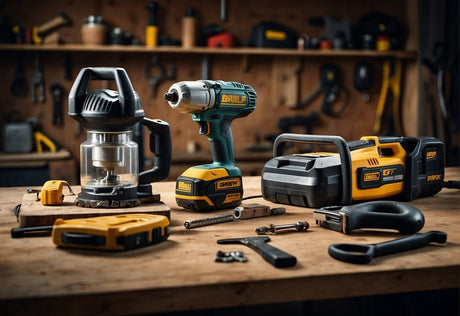


Complete guide to choosing your industrial deburring tools
What type of deburring tool to choose based on material and application?
Industrial files with grit 10 to 40 excel at manual finishing of welds and irregular surfaces requiring precise tactile control.
Rotary wire brushes made of braided steel wires effectively remove weld spatter, oxidation, and rust from structural steel at speeds of 6,000 to 15,000 RPM.
For stainless steel, prefer brushes made of stainless steel wires to avoid ferrous contamination compromising corrosion resistance.
Pneumatic deburrers developing 20,000 to 25,000 RPM are suitable for high-volume production requiring high speeds and lightness, reducing operator fatigue.
For aluminum alloys and soft metals, select tools with positive cutting geometries to avoid material accumulation in the teeth.
Carbide rotary burrs allow precise deburring of chamfers and complex contours inaccessible to conventional tools.
Polar Industrial Equipment advises on optimal selection based on frequency of use, production volumes, and required dimensional tolerances.
Manual versus pneumatic deburring tools: understanding the advantages of each type
Pneumatic rotary deburring tools develop speeds of 20,000 to 25,000 RPM for rapid burr removal in series production. Their reduced weight of 0.5 to 1.2 kg compared to equivalent electric tools minimizes fatigue during prolonged use of 6 to 8 hours daily.
They require a minimum 90 PSI air compressor with a flow rate of 4 to 6 CFM depending on the tool's power, representing an additional infrastructure investment.
Cordless 18V and 20V electric tools offer a compromise between the power of pneumatic tools and the portability of manual tools. Torque of 50 to 90 Nm with variable speeds from 0 to 3000 RPM allows adaptation according to material hardness.
Battery life of 2 to 4 hours with high-capacity batteries is suitable for workshops without pneumatic installations. Polar Industrial Equipment recommends evaluating production volume and existing infrastructure to determine the optimal technology.
Advanced deburring technologies: brushes, milling cutters, and rotary systems
DeWalt and Milwaukee offer brushless angle grinders equipped with AVS and TVS anti-vibration systems, reducing vibration transmission by 40 to 50% compared to conventional models.
This critical reduction minimizes the risk of musculoskeletal disorders during prolonged intensive deburring. Soft start prevents sudden initial torque that could damage parts or pull tools from hands on uneven surfaces.
Makita is developing braided wire brushes that increase cutting aggressiveness by 25% for rapid removal of thick burrs and stubborn weld residues. Pneumatic systems with electronic speed control maintain constant RPM under variable load for uniform finishing. TiN-coated carbide rotary burrs extend lifespan by 200% in abrasive materials like cast iron and high-strength steels.
Polar Industrial Equipment stocks compatible accessories for major industrial brands.
Professional applications: machining, welding, and surface preparation
Rotary deburring tools with fixed or floating blades process bores from 3 to 50 mm in cycles of 2 to 5 seconds per part for maximum productivity. Integration on CNC lathes automates the process, reducing manual intervention and quality variability.
Metal fabricators and welders face significant burrs after plasma cutting, oxy-fuel cutting, and welding, requiring 4½" to 7" angle grinders with 40 to 60 grit abrasive discs. Rapid removal of spatter and welding slag prepares surfaces for painting or galvanizing.
Cup wire brushes remove oxidation and mill scale, ensuring optimal adhesion of protective coatings according to SSPC-SP surface preparation standards.
Manufacturers of hydraulic and pneumatic components require precise deburring to eliminate particles that could contaminate circuits and damage seals.
Tolerances of 0.05 to 0.1 mm demand controlled finishing tools such as diamond files and carbide rotary burrs. Post-deburring dimensional inspection with digital calipers validates conformity to specifications.
Polar Industrial Equipment provides complete solutions, including tools, accessories, and measuring instruments.
Safety and Maintenance: Best Practices for Industrial Deburring
Abrasion-resistant gloves prevent cuts from sharp edges while maintaining the dexterity required for precise part handling.
Maintaining deburring tools extends their lifespan and maintains optimal performance.
Clean wire brushes after each use to remove metal particle buildup, which can reduce cutting efficiency by 30 to 40%. Lubricate bearings and pneumatic mechanisms weekly with light oil to prevent seizing and internal corrosion.
Inspect rotary deburring blades monthly, replacing any that show chipping or excessive wear, which can compromise finish quality.
Store tools in dry places protected from humidity, which can cause rapid oxidation of metallic components.
Carbide burrs and blades require protection against impacts that can damage cutting edges. Check the air pressure of pneumatic tools, maintaining a constant 90 PSI for specified performance.
Polar Industrial Equipment offers replacement parts and accessories for preventive maintenance, minimizing downtime and maximizing return on investment.