
Dewalt
DEWALT DWE6411 1/4 Sheet Orbital Sander
Regular price CA$109.00Unit price /UnavailableVery low stock (2 units)-
Makita
Makita LXT 5" DBO180Z Orbital Sander (TOOL)
Regular price CA$139.00Unit price /UnavailableVery low stock (1 unit)-
Dewalt
HARD BACKING PAD FOR GYPSUM SANDER
Regular price CA$42.99Unit price /UnavailableLow stock (5 units)-
-
Makita
Makita 9903 Variable Speed Belt Sander 3 x 21 in.
Regular price CA$459.00Unit price /UnavailableVery low stock (2 units)-

Jet
JET 403355 3/4 X 20 1/2" BELT SANDER
Regular price CA$527.05Unit price /UnavailableVery low stock (1 unit)
Jet
Regular price CA$121.00Unit price /UnavailableVery low stock (1 unit)- Sold out
-

Dewalt
Brushless cordless sander with variable speed
Regular price CA$199.00Unit price /UnavailableLow stock (7 units)


Our recommendations
-

Dewalt
DEWALT 20 GAL VERTICAL COMPRESSOR DXCM20020US
Regular price CA$899.00Unit price /UnavailableVery low stock (2 units) -

Makita
Makita AC001GZ XGT 40Vmax Brushless Air Compressor (Tool)
Regular price CA$529.00Unit price /UnavailableVery low stock (1 unit) -

Chicago pneumatic
Regular price CA$302.45Unit price /UnavailableVery low stock (2 units) -
Makita
8-7/8" Gypsum Sandblaster (Tool) DSL801ZX1
Regular price CA$649.00Unit price /UnavailableVery low stock (1 unit) -
-
Dewalt
Regular price CA$679.00Unit price /UnavailableLow stock (5 units) -
-
 Sold out
 -
Makita
Makita LXT 5" DBO180Z Orbital Sander (TOOL)
Regular price CA$139.00Unit price /UnavailableVery low stock (1 unit) -
-

Makita
CORDLESS POLISHER 7'' XGT PV001GZ MAKITA
Regular price CA$429.00Unit price /UnavailableVery low stock (1 unit) -

Topring
TOPRING 69.050 PNEUMATIC TOOL OIL 500ML
Regular price CA$9.22Unit price /UnavailableLow stock (10 units) -
 Sold out
Bostitch
BOSTITCH 6 GALLON OIL-FREE COMPRESSOR BTFP02012
Regular price CA$324.81Unit price /Unavailable -
 Sold out
 -

Makita
16GA 18V FINISH NAILER. LXT (TOOL ONLY) MAKITA DBN610Z
Regular price CA$625.00Unit price /UnavailableLow stock (4 units)


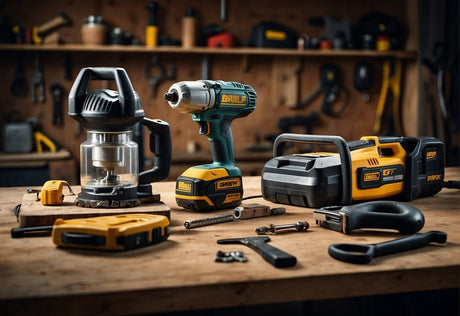


A complete guide to choosing your professional sanders and polishers
Which sander should you choose depending on your type of work and your power source?
Dewalt and Makita electric sanders offer absolute mobility, perfect for on-site work or workshops without pneumatic infrastructure. Their modern brushless motors deliver 400W of sustained power with a 45-minute runtime on a 5.0Ah battery.
For aggressive sanding of welds or rust removal, choose jet sanders with their ability to project abrasive at 90 PSI. Rotary polishers are suitable for final buffing, while random orbital polishers eliminate micro-scratches without leaving holograms.
What technical specifications determine the actual performance of a professional sander?
An orbital sander with a 5mm orbit and 10,000 OPM on a 150mm pad removes 40% more material than a 3mm model at the same speed. Pneumatic sanders require a minimum airflow, typically 4 CFM at 90 PSI, to maintain rated performance.
Under-powering your tool dramatically reduces efficiency and accelerates wear on internal components. Weight directly impacts fatigue: 1.2 kg for prolonged use overhead, up to 3 kg acceptable for horizontal work with a support. Quick-release systems like Velcro lose 15% of their grip after 200 cycles, while clamp systems maintain performance over 2000+ disc changes.
Modern technologies that are revolutionizing professional sanding and polishing
The electronic control technology automatically adjusts the speed under load, maintaining constant material removal even when applying firm pressure.
Integrated cyclone extraction systems capture up to 95% of dust at the source, radically transforming workshop air quality.
Makita incorporates vibration sensors that reduce HAVS (hand-arm vibration syndrome) exposure by 40% versus standard models.
Modern Jet sandblasters use tungsten carbide nozzles that last 10 times longer than steel, maintaining a consistent abrasion profile for hundreds of hours. Chicago Pneumatic has developed integrated silencers that reduce noise levels below 85dB, eliminating the need for double hearing protection.
How to optimize productivity and results with your finishing equipment?
The rotary polisher at 1500 RPM with cutting compound removes 1200 grit scratches in three passes, then the finishing at 600 RPM with cream polish reveals a mirror-like shine. On industrial welds, the sandblaster at 60 PSI with 60 grit removes the weld bead in 30 seconds, where a grinder would take 3 minutes with the risk of gouging the base metal.
Cabinetmakers prefer orbital sanders with a 3mm eccentricity for softwoods to prevent burning, switching to 5mm for hardwoods. Replacing the disc every 15 minutes of intensive use maintains optimal material removal rates and reduces heat buildup.
Ergonomics and compatibility: maximizing the comfort and versatility of your investment
The trigger's position determines the natural posture: lateral for vertical sanding, superior for horizontal work. Makita and Dewalt models share 150mm and 125mm sanding pads, allowing for a common accessory stock that simplifies inventory management.
Universal 1/4" NPT air fittings ensure cross-brand compatibility, but always verify the required CFM against your compressor's capacity. Molded cases provide protection during transport and include compartments for 12+ discs, extending equipment life.
Investing in a second table allows for alternating use while one cools down, doubling productivity during intensive sessions. The 150mm shaft extensions provide access to confined areas inaccessible with the main tool body.