

Lincoln Electric
HALF MASK P100 MEDIUM LINCOLN ELECTRIC K4683-M
Regular price CA$59.67Unit price /UnavailableLow stock (3 units)

3M
2000 Series Particulate Respirator Prefilters 2097 3M (Pair)
Regular price CA$15.01Unit price /UnavailableIn stock (62 units)
Uvex
UVEX S8555 CLEAR REPLACEMENT VISOR
Regular price CA$29.91Unit price /UnavailableLow stock (4 units)
Watson Gloves
WATSON SUMMER LONGHORN GLOVES T-LARGE
Regular price CA$7.86Unit price /UnavailableIn stock (27 units) Sale
SaleWatson Gloves
GREEN MONKEY GLOVES 8MIL S-LARGE WATSON 5558PF-XL
Sale price CA$21.58 Regular price CA$21.95Unit price /UnavailableLow stock (4 units)
Watson Gloves
Regular price CA$1.96Unit price /UnavailableIn stock (96 units) Sold out
Superior Glove Works ltd
ENDURA GENERAL PURPOSE LEATHER GLOVES X-LARGE
Regular price CA$22.95Unit price /Unavailable
Superior Glove Works ltd
ENDURA LARGE GENERAL PURPOSE LEATHER GLOVES
Regular price CA$22.95Unit price /UnavailableLow stock (6 units)
Watson Gloves
Regular price CA$12.79Unit price /UnavailableIn stock (15 units)

Honeywell
TYPE 2 QUICK LOK RATCHET WHITE HELMET
Regular price CA$104.87Unit price /UnavailableVery low stock (2 units)
Honeywell
LL-30 STRINGED PLUG (100 PAIRS)
Regular price CA$37.88Unit price /UnavailableIn stock (23 units)
Honeywell
REFILL FOR HL400 DISPENSER (200 PAIRS)
Regular price CA$35.49Unit price /UnavailableLow stock (4 units) Sale
SaleNeos
NEOS VOYAGER MID SHOE OVERCOVER (UNLINED) LARGE
Sale price CA$99.00 Regular price CA$116.67Unit price /UnavailableLow stock (5 units) Sale
SaleNeos
NEOS INSULATED SHOE OVERCOVER WITH CRAMPONS NAVIGATOR GLACIER TREK 3XL
Sale price CA$169.00 Regular price CA$209.00Unit price /UnavailableIn stock (11 units) Sale
SaleNeos
NEOS NAVIGATOR 5 SHOE COVERS 3XL
Sale price CA$149.00 Regular price CA$209.00Unit price /UnavailableIn stock (18 units) Sale
SaleNeos
NEOS NAVIGATOR 5 SHOE COVERS 2XL
Sale price CA$149.00 Regular price CA$209.00Unit price /UnavailableLow stock (3 units)


Our recommendations
-

Jackson Safety
Regular price CA$19.80Unit price /UnavailableVery low stock (1 unit) -

Dynamic (PIP)
Regular price CA$15.65Unit price /UnavailableVery low stock (2 units) -

Klein tools
Regular price CA$43.37Unit price /UnavailableLow stock (3 units) -
 Sold out
 -

Sellstrom
Regular price CA$7.49Unit price /UnavailableIn stock (11 units) -

Sellstrom
Regular price CA$9.59Unit price /UnavailableLow stock (9 units) -
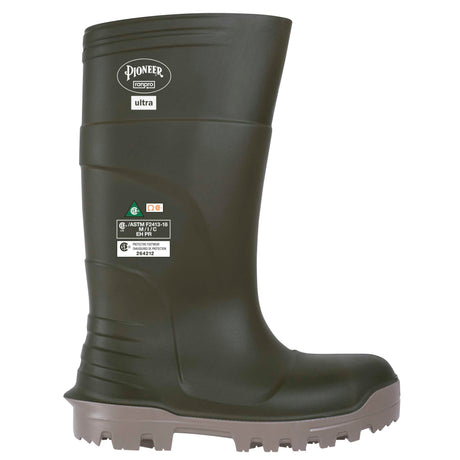
Pioneer
SAFETY/RAIN BOOT SIZE 9 V4240140-9 RANPRO PIONEER
Regular price CA$134.19Unit price /UnavailableVery low stock (1 unit) -

Pioneer
Fireproof cover size 56 orange V2540650-56 Pioneer
Regular price CA$169.95Unit price /UnavailableVery low stock (2 units) -


Pioneer
PIONEER FIRE-RESISTANT ALL-PURPOSE COVER SIZE 54 BLUE V2540510-54
Regular price CA$167.87Unit price /UnavailableLow stock (4 units) -

Pioneer
LIGHTWEIGHT WATERPROOF SAFETY OVERALLS XL
Regular price CA$39.47Unit price /UnavailableVery low stock (2 units) -

Watson Gloves
ANTI-CUT GLOVE 379 T-LARGE STEALTH PHOENIX
Regular price CA$11.54Unit price /UnavailableIn stock (128 units) -
 Sale
SalePioneer
PIONEER LARGE CUT-RESISTANT GLOVE
Sale price CA$8.95 Regular price CA$9.10Unit price /UnavailableIn stock (26 units) -
Watson Gloves
Regular price CA$12.79Unit price /UnavailableIn stock (15 units)




Complete Guide to Choosing Safety Clothing and Professional PPE
What Defines a Professional Personal Protective Equipment Item?
Canadian professionals face temperature swings of 70°C between summer and winter, requiring technical fabrics that breathe at 30°C and insulate down to -40°C. Brands like 3M and Honeywell have developed fibers capable of regulating body temperature while wicking moisture, reducing fatigue and risks linked to thermal discomfort.
How Do High-Visibility Classes Affect Protection on the Worksite?
Class 3 represents the highest level of protection, requiring 1,240 cm² of fluorescent material. It covers high-traffic environments such as highways and railways. 3M Scotchlite retroreflective tape delivers a reflectivity of 500 candela per lux per square meter, visible up to 300 meters in complete darkness.
What PPE Technologies Reduce Risks in High-Exposure Trades?
For hearing protection, electronic Honeywell earmuffs amplify conversations below 82 dB while blocking dangerous noise. Dentec Safety polycarbonate glasses with anti-fog treatment maintain clear vision during cold-to-warm transitions, solving a real challenge for teams moving between indoor and outdoor environments throughout the day.
How to Equip a Welder or Mechanic Based on the Specific Risks of Their Trade?
The mechanic requires protection adapted to different hazards. Composite toecap boots prevent thermal conductivity, and gloves with Kevlar reinforcement at friction points maintain dexterity while withstanding cut resistance Level A4. A 3M mask with P100 cartridges filters 99.97% of metallic fume particles, reducing the risk of occupational lung disease.
What Accessories Extend the Life of Safety Clothing and PPE?
Invest in ventilated bags for high-visibility garments: trapped moisture degrades the reflective properties of 3M Scotchlite tape. Hygiene kits with replacement cushions maintain the comfort and acoustic seal of earmuffs after months of intensive use. Waterproofing sprays restore the hydrophobic properties of jackets after 20 to 30 washes, preserving protection against the elements.