

 BestsellerSold out
 Bestseller
Dewalt
DeWalt DCN45RNB 20V MAX Cordless Roofing Nailer (Tool Only)
Regular price CA$468.00Unit price /UnavailableIn stock (14 units)
 BestsellerSold out
 Bestseller
Dewalt
20V NEW GENERATION FRAMING NAILER. DCN930B
Regular price CA$599.00Unit price /UnavailableLow stock (8 units) Sale
SaleDewalt
Sale price CA$428.00 Regular price CA$468.00Unit price /UnavailableLow stock (7 units)
 Bestseller
Dewalt
Regular price CA$638.00Unit price /UnavailableLow stock (9 units) BestsellerSold out
Dewalt
Regular price CA$458.00Unit price /UnavailableLow stock (7 units)
Blubird Industries
WATER REEL 1/2'' X 50' BLUEBIRD
Regular price CA$459.00Unit price /UnavailableLow stock (7 units)
Topring
3/8" x 50' Retractable Hose Reel Topring 79.334
Regular price CA$199.00Unit price /UnavailableVery low stock (1 unit)
Jet
JET 402114 DIE GRINDER 1/4" HAUTE INTENSITÉ
Regular price CA$138.00Unit price /UnavailableIn stock (15 units)
 Sold out
Dewalt
ADAPTATEUR POUR REVETEMENT POUR DCN45RNB (DZNRNVSA)
Regular price CA$36.18Unit price /Unavailable Sold out


Dewalt
DEWALT DCN210B CLOUEUSE A FINITION 18GA
Regular price CA$479.00Unit price /UnavailableLow stock (3 units)

King Canada
REEL 50' X 3/8'' ARCTIC FLEX KING K-5038FRL
Regular price CA$109.99Unit price /UnavailableLow stock (3 units)


| Modèle | Prix |
|---|---|
| Cloueuse à toiture DeWalt DCN45RNB 20V MAX (outil seul) | 468,00 $ |
| Cloueuse à charpente 20V nouvelle génération DCN930B | 599,00 $ |
| Cloueuse de finition 16 ga DeWalt DCN662B (outil seul) | 428,00 $ |
| Agrafeuse sans fil 18 ga DeWalt DCN681B (outil seul) | 458,00 $ |
| Cloueuse de finition 18 ga DeWalt DCN210B | 479,00 $ |
| Meuleuse à matrice pneumatique JET 402114, 1/4 po haute intensité | 138,00 $ |
| Marteau pneumatique JET 404123 (.401) | 90,16 $ |
| Fusil à air 4 po JET 409903 | 10,80 $ |
Our recommendations
-
Bestseller
Dewalt
DeWalt DCN45RNB 20V MAX Cordless Roofing Nailer (Tool Only)
Regular price CA$468.00Unit price /UnavailableIn stock (14 units) -
Bestseller
Dewalt
20V NEW GENERATION FRAMING NAILER. DCN930B
Regular price CA$599.00Unit price /UnavailableLow stock (8 units) -
Sale
Dewalt
Sale price CA$428.00 Regular price CA$468.00Unit price /UnavailableLow stock (7 units) -
Dewalt
Regular price CA$458.00Unit price /UnavailableLow stock (7 units) -
Dewalt
DEWALT DCN210B CLOUEUSE A FINITION 18GA
Regular price CA$479.00Unit price /UnavailableLow stock (3 units) -
Jet
JET 402114 DIE GRINDER 1/4" HAUTE INTENSITÉ
Regular price CA$138.00Unit price /UnavailableIn stock (15 units) -

Jet
PNEUMATIC HAMMER .401 JET 404123
Regular price CA$90.16Unit price /UnavailableLow stock (9 units) -
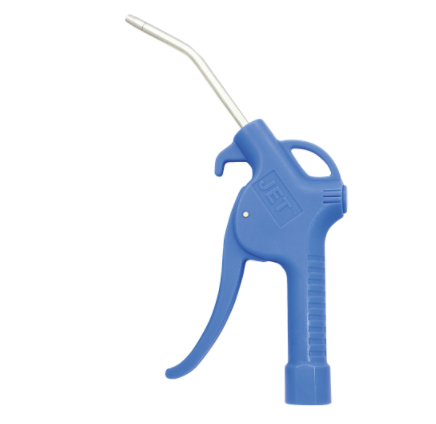



A complete guide to choosing your professional pneumatic tools and compressors
Why do pneumatic tools still dominate Canadian professional workshops?
Modern compressors generate between 90 and 175 PSI, allowing multiple tools to be powered simultaneously on the same network. This versatility transforms an initial investment into a scalable system: a 60-gallon Be Pressure compressor can serve an entire workshop for 15 to 20 years with minimal maintenance. Professional mechanics particularly appreciate the consistent tightening torque, essential for meeting the specifications of automotive and industrial manufacturers.
What compressor capacity is needed to efficiently power your industrial pneumatic tools?
The tank capacity (in gallons) determines the operating time between compression cycles. A 20-gallon tank is suitable for heavy-duty DIY projects, but professional workshops prefer 60 to 80 gallons to avoid frequent start-up cycles that wear out the motor. The ACCUTEK and Be Pressure compressors in our inventory offer CFM/gallon ratios optimized for Canadian conditions.
Motor power (HP) affects filling time: a 5 HP motor fills a 60-gallon tank in 3 to 4 minutes, compared to 8 to 10 minutes for a 2 HP motor. For heavy daily use, invest in at least a 3.5 HP motor with a 220V power supply to limit current surges.
Current technologies: innovations that are redefining pneumatic equipment in Canada
Oil-free nailers like those from Bostitch eliminate the risk of contamination on delicate finishes and reduce maintenance to almost zero. Sequential valve technology now allows for rapid nailing at 8 shots per second with consistent millimeter accuracy. Hybrid hydraulic-pneumatic riveters combine pneumatic power (pulling force up to 3,000 lbf) and hydraulic control for aerospace and rail applications.
Bluebird Industries offers integrated filtration systems that remove 99.9% of moisture and oil particles, crucial for painting or electronic assembly applications where even the slightest contamination can ruin the work. These innovations transform compressed air into a vector of industrial precision rather than simply a source of brute force.
How to maximize the performance and longevity of your pneumatic tools in a professional workshop?
The working pressure must be adjusted according to the tool: 90 PSI for impact wrenches and drills, 70-80 PSI for finish nailers, and 100-120 PSI for angle grinders. Excessive pressure accelerates wear and increases air consumption by 30% for only 10% more power. Our precision regulators allow for adjustment to the nearest PSI.
Drain the compressor reservoir daily to remove condensation, which is particularly critical in Quebec where the humidity from the warm indoor air condenses in the cold reservoir. This suspended water corrodes from the inside and contaminates tools. A well-maintained compressor retains its efficiency for 15 to 20 years, while a neglected one loses 40% of its performance in 3 to 5 years.
Ergonomics and ecosystem: how to optimize your pneumatic system for maximum comfort?
Modern ergonomics incorporate anti-vibration handles that reduce fatigue during extended use. Bostitch nailers and ACCUTEK wrenches feature damping systems that reduce vibration transmission to the hand by a factor of three, crucial for meeting Canadian occupational health and safety standards. The reduced weight of pneumatic tools (typically 40% lighter than an electric equivalent) protects joints on long job sites.
To maximize your investment, consider the complete ecosystem: a central compressor simultaneously powers a sandblasting station, paint system, handheld tools, and cleaning equipment. This systemic approach transforms compressed air into a workshop utility as essential as electricity, fully justifying the initial investment in professional-grade equipment.